15天的新加坡 Entrepreneurship 之旅,我適合當創業家嗎? / ACE.sg, SMU, NUS Enterprise …
15 Days in Singapore's Entrepreneurship Program: Could I Actually Be a Founder? / ACE.sg, SMU, NUS Enterprise…
回顧職涯探索的歷程,我曾在新創公司任職,親身體驗新創的文化,以及市場前景的不確定性,同時,也在企業內部的新創相關部門,認識企業如何評估新創,在過程中累積越多經驗與眼界。而在這次出發到新加坡前,我心中一直有個問題在大聲疾呼:「我到底要不要創業?」
在台灣,我們太習慣遵循預設好的劇本——畢業後找一份穩定的正職,安穩地朝九晚五,照著既定的流程走下去。坦白說,這沒有不好,但心中仍感到可惜。
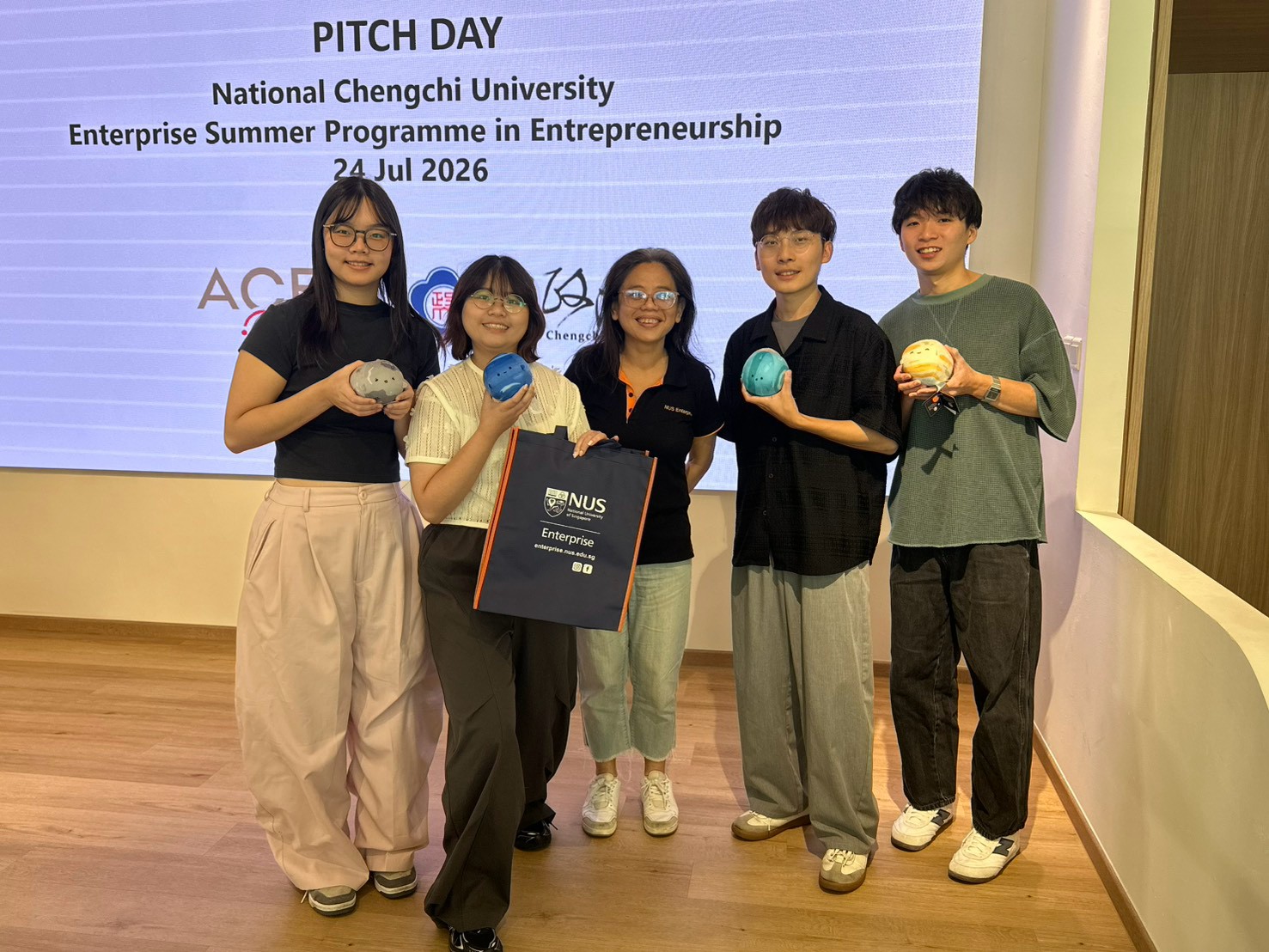
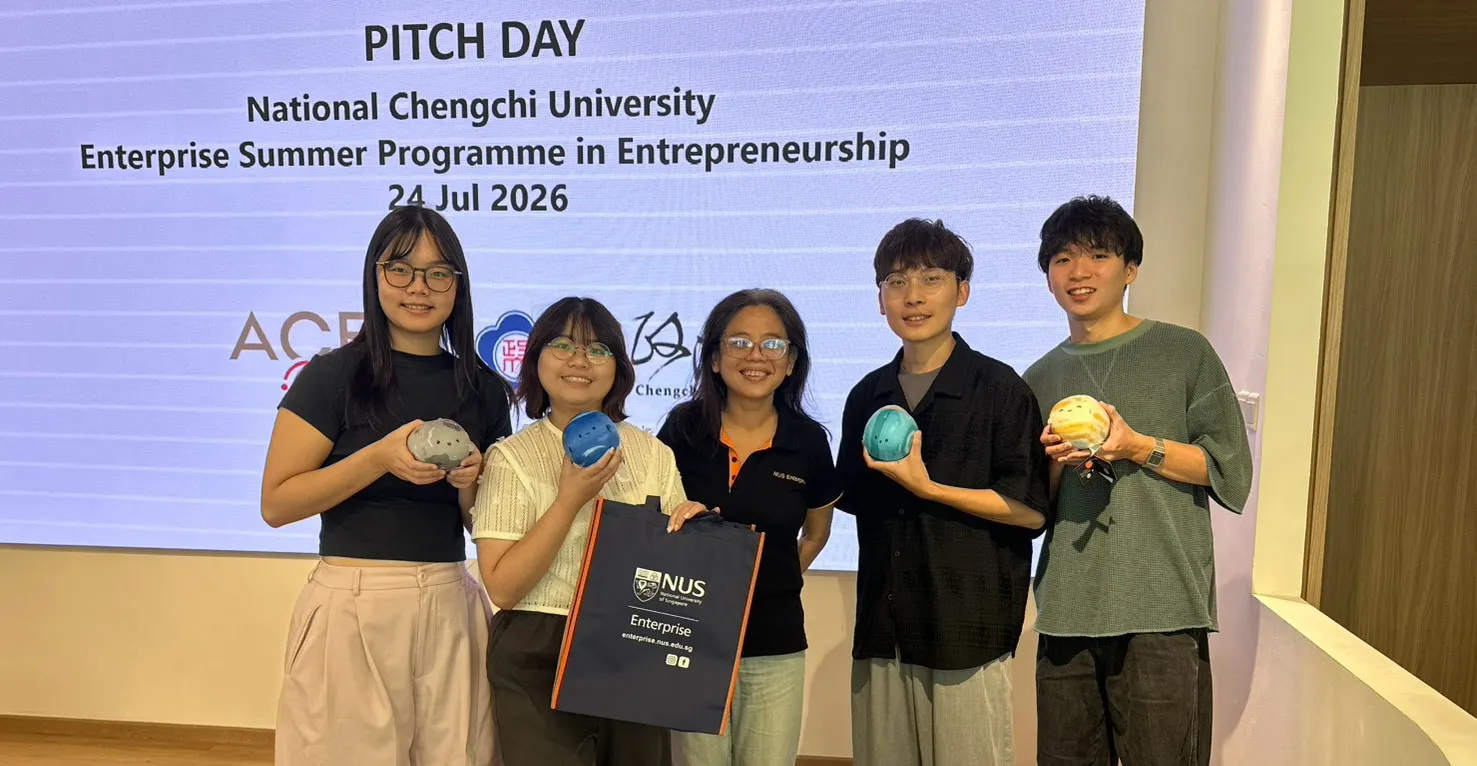
有時候不是沒有點子,而是沒有勇氣跨出那一步,至少對我而言是如此,我不知創業的途徑該付出什麼,該有哪些心理準備?帶著這個懸而未決的問題,這個暑假我參加了由政大產創中心(CICII)、ACE.sg 與 SMU 共同舉辦的 Entrepreneurship Program,在新加坡待了 15 天,想在不同的國土上,看看大家如何回應這個問題。
面向世界:市場想像的落差
在這趟旅程裡,我最喜歡的部分,正是跟當地創業家面對面聊天。在新加坡,基於政策支持與在地文化的推波助瀾,聚集了大量年輕、優秀的創業者。我很享受聽他們講自己的故事,包含他們想解決什麼問題、怎麼拆解問題、又是怎麼一步步走到今天。我很喜歡他們自帶的創新精神,以及眼中閃閃發光的熱忱。而跟台灣不同的是,Overseas 一詞普遍出現在每次的對話中。這些創業家真切意識到新加坡內需市場不夠大,不足以撐起企業的野心,每一家我們接觸到的新創,目標市場都是國際,而不是本地。
這跟台灣的新創圈(或說我認識的新創圈)形成很鮮明的對比。新加坡人能以英語對談流暢自如(華文才比較可能是阻礙,哈哈),對外 Pitch 少了一層阻力,相較之下,台灣新創常常還在「英語不夠流暢」這個門檻前掙扎,也更容易先設想內需市場能不能撐得起來。
冒險嘗試:創新的起點
有趣的是,這種「敢衝」、「國際化」的心態,不只出現在人身上,也體現在企業及教育機構身上。
SMU 特別為政大學生們規劃了一系列的課程,帶著「一開始就要說服國際投資人」的想法,教授與 SMU 校友帶我們上了扎實的課程,涵蓋 Investor lens、IP and Moats、Business model、Pitching、Term sheet,內容由淺入深,每堂課都很紮實地上好上滿兩個多小時(雖然我體感是三小時啦)。身為科智所的學生,這些內容相較熟悉,但我覺得很有收穫的部分,是聽這些教授如何說明這些課程的重要性,如何在 Founder 與 Investor 的視角來回切換,比起學術、傳統的講授,這些跟實務接軌的經驗與眼界,才是值得之處。
在企業參訪的部分,令我印象最深刻的是 The Gear,一間由日本建設公司 Kajima Corporation 建立的創新機構。The Gear 的辦公大樓是一個智慧建築,佈滿了 IoT 感測器,不只蒐集溫濕度等環境資料,員工需配戴一個戒指,用於蒐集用戶行為數據,讓整棟建築物變成一個大型試驗場域,並開放讓新創技術進駐、測試、優化。The Gear 的特別之處在於,把自己定位成新創的「早期客戶」,對創新技術的接受度極高(風險耐受度大概也是),一家建設公司願意把自己的辦公大樓變成白老鼠,願意投注資金在嘗試新創的技術與產品,這種開放的心態,是我在台灣的企業場景裡鮮少見到的,十足難能可貴。 (The Gear 真的好棒,超級喜歡,喜歡到想去那邊工作)
東南亞門戶:新加坡的生態系定位
在來新加坡之前,我膚淺的認為新加坡的魅力,正是「資金」,畢竟投資人與資金匯聚新加坡早已是眾所皆知的事。但新加坡真正想要的角色,是成為東南亞的 Gateway。當瞄準的是泰國、越南這類市場時,新加坡可以作為一個中介點,化解語言不通、文化不通的問題。
同時,在這趟旅程中,我切身的體會到,新加坡的新創圈,是由學術機構、民營企業,加上 Lorong AI、SCAPE、LaunchPad@one-north 這些創業者社群場域一起撐起來的。學術培育人才,產業與資金提供機會,人脈提供眼界,在新加坡的新創圈中彼此相依。
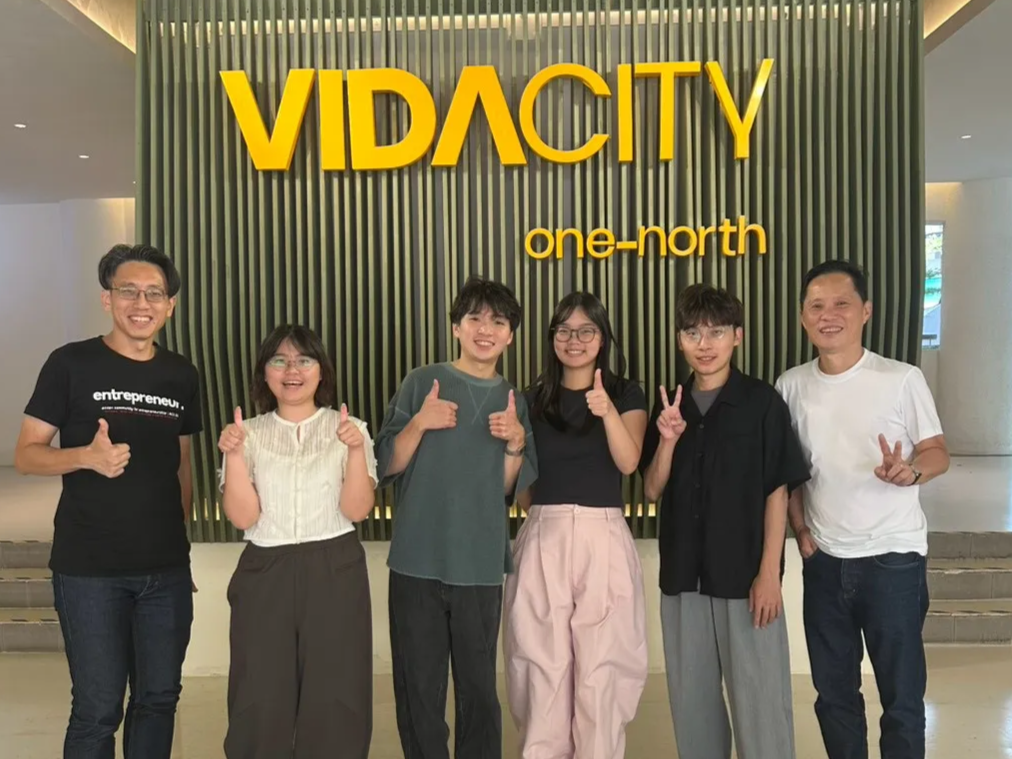
剛好這次有幸參與到 LaunchPad@one-north 的社群聚會,因此我問了:「這樣的聚會對於新創公司、創業者來說,有什麼幫助嗎?」而新創的Co-founder是這麼回覆我的:「儘管是不同領域的新創,大家面對的挑戰可能是很類似的。社群是一個互相幫助、交流經驗的渠道。」
回頭看台灣,我們有沒有一個相對應的、清楚的生態系定位?有沒有創業者們的緊密社群呢?
回到我自己
那麼,這趟旅程有沒有幫我想清楚「要不要創業」這個問題?
老實說,我還沒有一個肯定的答案,但我確實有一點被「啟蒙」了。我想更近一步的看看,以學生身份,我能走得多遠。或許不是創業,一個 Side Project 正足以見識自己的能耐(謝謝 AI 讓我有動手的能力)。
我也從這次的旅程中,得到意料之外的收穫。比如親眼見證什麼叫做真正的 Multicultural。在新加坡,不同種族、不同背景的人在同一片土地上和諧共處,這種景象讓我打從心底讚嘆,薰陶在國際化的環境下,我感覺自己更勇敢了一點,更勇於開口用英文跟人交流,15天的旅程,讓我對未來、對自己有更多不一樣的想像。
最後,再次謝謝政大產創中心,也謝謝教育部的資金,謝謝願意培育創業者的政大,也謝謝新加坡的夥伴們,在懞懂的學生心中,種下創新的種子。
Looking back on my career exploration so far, I’ve worked at a startup and experienced its culture and the uncertainty of the market firsthand, and I’ve also worked inside a corporate innovation unit, learning how large companies evaluate startups. Each of these experiences added a little more perspective. Before I left for Singapore, one question kept nagging at me: “Do I actually want to start a company?”
In Taiwan, we’re so used to following a pre-written script — graduate, find a stable full-time job, settle into a steady nine-to-five, and follow the path that’s already laid out. Honestly, there’s nothing wrong with that. But some part of me still feels a little wistful about it.
Sometimes it’s not that we lack ideas — it’s that we lack the courage to take the leap. At least that’s true for me. I didn’t know what starting a company would actually cost me, or what I’d need to prepare myself for, mentally. Carrying that unresolved question with me, I spent this past summer in the Entrepreneurship Program jointly organized by NCCU’s CICII, ACE.sg, and SMU — 15 days in Singapore, hoping to see how people answer that question.
Facing the World: A Gap in How Big We Imagine the Market
My favorite part of this trip was talking face-to-face with local founders. Singapore, propped up by policy support and its own local culture, has drawn together a huge number of young, talented entrepreneurs. I loved hearing them tell their own stories — what problem they wanted to solve, how they broke it down, and how they got to where they are now. I loved the innovative spirit they carried with them, and the spark in their eyes. One thing that stood out compared to Taiwan: the word “overseas” came up in almost every conversation. These founders were acutely aware that Singapore’s domestic market simply isn’t big enough to support corporate ambition — every startup we encountered was targeting an international market from day one.
That stands in sharp contrast to Taiwan’s startup ecosystem (or at least the corner of it I know). Singaporeans can converse fluently in English (if anything, Mandarin is more likely to be the barrier — ha), which removes a layer of friction when pitching abroad. Taiwanese startups, by comparison, often get stuck at the “my English isn’t good enough” threshold, and are more likely to ask first whether the domestic market alone can sustain them.
Daring to Try: Where Innovation Begins
SMU built a course for us around the idea that you need to convince international investors from day one — covering the investor lens, IP and moats, business models, pitching, term sheets. What stayed with me wasn’t the content itself (fairly familiar as a student in tech management), but watching professors switch fluidly between the founder’s and the investor’s perspective.
The company visit that stuck with me most was The Gear, an innovation facility built by Kajima Corporation. The whole office is wired with IoT — sensors tracking temperature and humidity, employees wearing rings that track behavior — turning the building into a live testbed for startups. The Gear positions itself as an early customer, with a striking appetite for new technology (and risk). A construction company willing to turn its own office into a guinea pig — that kind of openness is rare in Taiwan’s corporate world.
(The Gear was honestly amazing. I loved it so much I kind of want to work there🤣)
Gateway to Southeast Asia: Singapore’s Place in the Ecosystem
I used to think Singapore’s appeal was just money. But what it really wants to be is Southeast Asia’s Gateway — a bridge into markets like Thailand or Vietnam, smoothing over language and culture gaps. That role is held up by academic institutions, private companies, and community spaces like Lorong AI, SCAPE, and LaunchPad@one-north, all working together.
At a LaunchPad@one-north community, I asked a co-founder what these events actually do for startups. She said: “Even in different fields, the challenges are often similar. Community is a channel for helping each other.” Looking back at Taiwan — do we have anything like that?
Back to Myself
So — did this trip help me figure out whether I want to start a company?
Honestly, I still don’t have a definitive answer. But I have, in some sense, been “awakened.” I want to look further into how far I can go, as a student. Maybe it won’t be a startup — maybe a side project is enough to test what I’m capable of (thank you, AI, for giving me the ability to actually build things).
I also got something unexpected: watching real multiculturalism in action, different backgrounds coexisting on the same small island. It made me a little braver, a little more willing to speak up in English. Fifteen days gave me a richer way of imagining my future — and myself.
Finally, my thanks again to NCCU’s CICII, to the Ministry of Education for its funding, to NCCU for being willing to cultivate entrepreneurs, and to all the friends I met in Singapore — for planting a seed of innovation in the mind of one still-uncertain student.